


Dental Implants in Vienna: When Are They the Best Solution for Missing Teeth?
Losing a tooth can affect much more than just your smile. A missing tooth can influence how you chew, how you speak, and even how your face looks over time. Many people also experience a loss of confidence when they feel uncomfortable about visible gaps in their teeth.
Because of these effects, replacing a missing tooth is not only a cosmetic decision but also an important step for maintaining long-term oral health. Among the different treatment options available today, dental implants are widely considered one of the most advanced and durable solutions for tooth replacement.
Many patients therefore ask an important question: When is a dental implant in Vienna the best solution for replacing a missing tooth?
The answer depends on several factors, including oral health, jawbone condition, and long-term treatment goals. This guide explains when dental implants are recommended, how they compare to other tooth replacement options, and how DentalAce helps patients find experienced dentists in Vienna.
Why Replacing a Missing Tooth Is Important
Some people assume that losing a tooth is mostly a cosmetic issue, especially if the missing tooth is located in the back of the mouth. However, untreated tooth loss can lead to several long-term dental problems.
One of the most common consequences is the shifting of neighboring teeth. Teeth naturally move over time, and when a gap is left untreated, adjacent teeth may drift into the empty space. This can lead to bite problems and uneven pressure on other teeth.
Another important concern is bone loss in the jaw. The roots of natural teeth stimulate the jawbone whenever you chew. When a tooth is missing, the bone in that area no longer receives this stimulation and can gradually shrink.
Over time, missing teeth can also contribute to:
- Bite misalignment
- Difficulty chewing certain foods
- Increased risk of gum disease
- Changes in facial structure
- Additional tooth loss
Because of these risks, dentists usually recommend replacing missing teeth as early as possible.
What Is a Dental Implant?
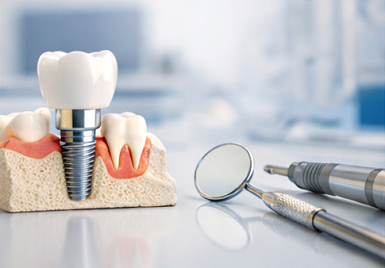
A dental implant is an artificial tooth root that is placed into the jawbone to support a replacement tooth. Most implants are made from titanium or other biocompatible materials that integrate well with human bone.
The implant acts as a stable foundation for a dental crown, which replaces the visible part of the tooth.
Unlike removable dentures, dental implants are fixed in place and function very similarly to natural teeth. Once the implant has fused with the bone, the replacement tooth can restore both the appearance and function of the missing tooth.
Because of their stability and durability, dental implants are often considered one of the most reliable tooth replacement solutions in modern dentistry.
When Are Dental Implants the Best Choice?
When a Single Tooth Is Missing
If a patient has lost a single tooth, a dental implant can replace it without affecting the surrounding teeth. Traditional dental bridges require neighboring teeth to be reshaped so they can support the bridge, while implants preserve the natural structure of adjacent teeth.
When a Long-Term Solution Is Desired
Dental implants are designed to last for many years. With proper care and regular dental checkups, implants can remain stable for 15 to 30 years or even longer.
When Jawbone Preservation Is Important
One of the unique advantages of dental implants is their ability to help maintain jawbone density. Because the implant functions like a natural tooth root, it continues to stimulate the bone during chewing.
When Stability and Comfort Are Priorities
Removable dentures can sometimes move while speaking or eating. Dental implants provide significantly greater stability because they are anchored directly into the jawbone.
Dental Implants vs Other Tooth Replacement Options
Dental Bridges
Dental bridges are a common method for replacing missing teeth. They consist of a false tooth supported by crowns placed on the adjacent teeth. While effective, they require modifying healthy neighboring teeth.
Removable Dentures
Dentures are another widely used option, especially when multiple teeth are missing. They are generally less expensive initially but may provide less stability and comfort compared to dental implants.
Implant-Supported Crowns
An implant combined with a dental crown is often considered the most natural and stable tooth replacement solution because it replaces both the tooth root and the visible part of the tooth.
What Is the Dental Implant Procedure Like?
Initial Consultation
The first step is a consultation with a dentist or implant specialist. During this appointment, the dentist evaluates oral health, bone structure, and treatment goals.
Digital Diagnostics
Many modern dental clinics in Vienna use 3D imaging to evaluate the jawbone and plan the implant placement precisely.
Implant Placement
The implant is inserted into the jawbone under local anesthesia. Most patients report minimal discomfort during the procedure.
Healing Phase
During the healing phase, the implant integrates with the bone in a process known as osseointegration. This stage typically takes several months.
Placement of the Dental Crown
Once the implant is stable, a custom dental crown is attached. The crown is designed to match the patient’s natural teeth in color and shape.
How Much Do Dental Implants Cost in Vienna?
The cost of dental implants in Vienna varies depending on several factors:
- Number of implants required
- Jawbone condition
- Need for bone grafting
- Material used for the dental crown
- Diagnostic imaging and treatment planning
Because treatment approaches and pricing can differ between clinics, many patients prefer comparing treatment options before choosing a provider.
Finding the Right Dentist for Dental Implants in Vienna
Choosing the right dentist is an important step when considering dental implant treatment. Experience, technology, and treatment approach can all influence the outcome.
DentalAce is an online platform that helps patients find and compare dentists in Vienna. The platform provides information about dental treatments and helps users explore different providers in one place.
By offering a clearer overview of available options, DentalAce helps patients make more informed decisions about their dental care.
Benefits of Dental Implants
- Natural appearance
- Improved chewing function
- Long-term durability
- Protection of surrounding teeth
- Preservation of jawbone structure
- Improved comfort and stability
Frequently Asked Questions
How much do dental implants cost in Vienna?
Dental implants in Vienna typically cost between €1,500 and €3,500 per implant, depending on the clinic and complexity of the treatment.
How long do dental implants last?
With proper oral hygiene and regular dental visits, dental implants can last 15 to 30 years or longer.
Is getting a dental implant painful?
The procedure is usually performed under local anesthesia, and most patients report only mild discomfort afterward.
How long does the dental implant treatment take?
The entire process usually takes between three and six months, depending on healing time.
Compare Dentists for Dental Implants in Vienna
Choosing the right dentist is one of the most important steps in dental implant treatment.
DentalAce helps patients compare dentists, explore treatment options, and find the right specialist for dental implants in Vienna.
Explore dental treatments and dentists on DentalAce to take the first step toward restoring your smile.


